Water is one of those things we rarely think about until something goes wrong. A strange smell from the tap, cloudy water in a glass, or white marks around the sink can quickly turn an ordinary morning into a small household mystery. The truth is, water quality can vary considerably depending on where you live, your plumbing, and whether your home relies on municipal water or a private well.
That’s why choosing the right home water treatment solutions isn’t simply about making water taste better. The right system can address specific water-quality concerns, protect plumbing fixtures, and make everyday water more pleasant to use. But with so many filters, softeners, purifiers, and treatment systems available, figuring out what your home actually needs can feel a little overwhelming.
Start by Understanding What’s in Your Water
Before buying a treatment system, it helps to know what you’re dealing with. Water can contain minerals, sediment, chlorine, microorganisms, metals, and other substances depending on its source and local conditions.
For homeowners, water testing is often the best starting point. A basic test can reveal issues such as hardness, pH, iron, or chlorine. More detailed testing may be useful if you’re concerned about contaminants such as lead, arsenic, nitrates, or other substances.
This matters because there isn’t one magic filter that solves every water problem. A system designed to reduce sediment may do little for dissolved minerals, while a water softener isn’t intended to remove every contaminant.
In other words, don’t shop for a solution before you understand the problem.
Why Hard Water Deserves More Attention
Hard water is common in many parts of the country. It contains elevated levels of minerals, particularly calcium and magnesium. While hard water isn’t necessarily a health concern by itself, it can be a real nuisance around the house.
Over time, mineral deposits can collect inside pipes, faucets, showerheads, and appliances. You may notice a chalky film on dishes, dull-looking laundry, or soap that seems strangely difficult to rinse away.
That buildup can contribute to hard water damage, particularly when mineral scale accumulates inside water-using appliances and plumbing components. Water heaters, washing machines, dishwashers, and other equipment may have to work harder when scale becomes a persistent problem.
A water softener can help in homes where hardness is the primary issue. It works by reducing calcium and magnesium ions through an ion-exchange process. The result is softer water that generally produces less scale and allows soap to work more effectively.
Still, a softener isn’t automatically the right answer for every house. Testing first can save you from spending money on equipment you don’t actually need.
When Taste and Odor Become a Problem
Even when water looks perfectly clear, you might notice that it doesn’t taste or smell quite right. Chlorine can create a swimming-pool-like taste, while certain minerals or naturally occurring compounds can produce unpleasant odors.
Private well water can present additional challenges. Iron may leave orange or reddish staining, while hydrogen sulfide can create a rotten-egg odor. Sediment can also affect appearance and taste, especially after plumbing work or changes in a well system.
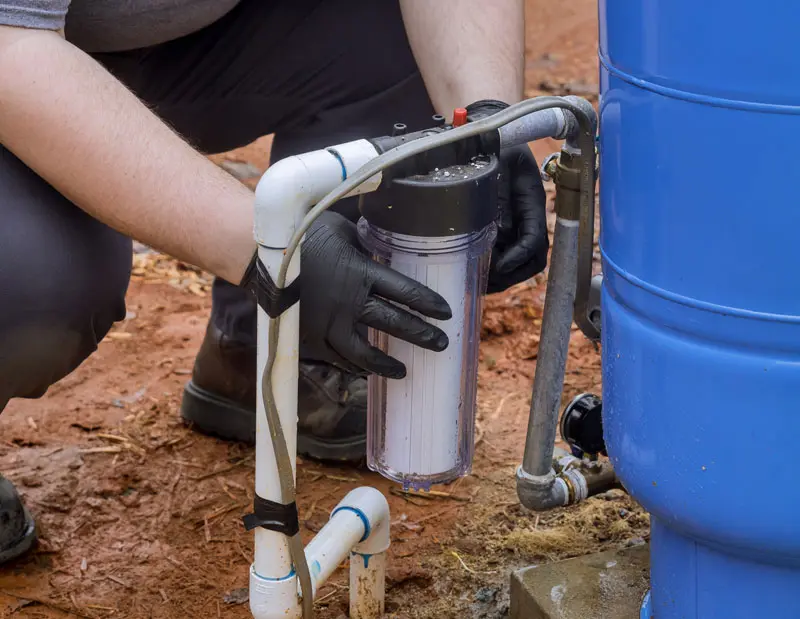
Activated carbon filtration is commonly used to improve taste and reduce chlorine and certain organic compounds. Other problems may require specialized filtration, oxidation, or disinfection.
If you’re dealing with persistent bad taste & smell, don’t simply cover it up with a countertop pitcher or bottled water. Find out what is causing it. Sometimes the issue is relatively simple; sometimes it points to a water-quality concern that deserves professional attention.
Choosing Between Whole-Home and Point-of-Use Treatment
One of the biggest decisions is where you want the water treated.
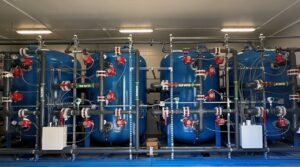
Whole-home systems treat water as it enters the property. This means treated water can reach showers, bathroom faucets, kitchen sinks, laundry areas, and appliances. For households dealing with hard water, sediment, or certain water-quality issues throughout the property, this approach can make sense.
Point-of-use systems, on the other hand, focus on a specific faucet or appliance. Reverse osmosis systems are a popular example, particularly for drinking and cooking water.
Neither approach is automatically better. It depends on your priorities.
If the main concern is drinking-water quality, a point-of-use system may be sufficient. If your entire home has hard water or sediment problems, treating water at the entry point may provide a more practical solution.
Think about how your family actually uses water. There’s no reason to build a complicated treatment setup when a simpler one can do the job.
Reverse Osmosis and Drinking Water
Reverse osmosis, often called RO, uses a semipermeable membrane to reduce many dissolved substances from water. It can be particularly useful when testing identifies contaminants or dissolved solids that conventional filtration doesn’t adequately address.
An RO system typically includes several stages of treatment, which may include sediment filtration, carbon filtration, the RO membrane, and sometimes a final polishing filter.
Because RO systems reject some water during the treatment process and require periodic filter and membrane replacement, maintenance matters. A neglected system won’t perform as well as it should.
For households considering RO, water testing again provides useful guidance. The goal shouldn’t be to remove everything from water simply because technology allows it. The goal is to treat the water appropriately for its intended use.
Maintenance Is Part of Water Treatment
Installing a treatment system is not the finish line. Filters need replacement, softeners may need salt or other maintenance, and RO membranes eventually require attention.
Skipping maintenance is one of those things that seems harmless until performance drops. A filter that should have been changed months ago can become less effective, and mineral buildup can reduce the efficiency of certain equipment.
Keep a simple maintenance schedule. Write down installation dates, filter replacement intervals, and service appointments. It takes only a few minutes, but it can prevent the system from quietly becoming an expensive decoration under your sink or in the garage.
Professional inspections can also be worthwhile when water conditions are complicated or equipment is integrated into the home’s plumbing.
The Best System Is the One That Fits Your Home
Water treatment shouldn’t be approached as a one-size-fits-all purchase. Your water source, household size, plumbing, budget, and specific water-quality concerns all influence what makes sense.
A good treatment plan usually starts with testing, followed by identifying the actual problem and selecting equipment designed to address it. Sometimes that means a simple carbon filter. In another home, it could mean a softener, whole-house filtration system, reverse osmosis unit, or a combination of technologies.
And honestly, simpler is often better. More equipment doesn’t automatically mean better water.
Clean, reliable water makes everyday life easier in ways we tend to overlook. From the first glass in the morning to a hot shower at night, it’s part of nearly everything we do. Taking the time to understand your water and choose treatment based on evidence—not guesswork—can protect your home, improve comfort, and give you one less household problem to worry about.