
Introduction
Science and technology continue to shape the future by encouraging innovation, creativity, and practical learning. Students, educators, and electronics enthusiasts often use mechanical and electronic components to build working models that explain scientific concepts effectively. From simple classroom demonstrations to advanced engineering prototypes, selecting the right components is essential for successful outcomes. Devices such as DC motors and servo motors, combined with engaging physics and science projects, help learners develop technical knowledge while improving their problem-solving and analytical skills.
DC Motor for Everyday Applications
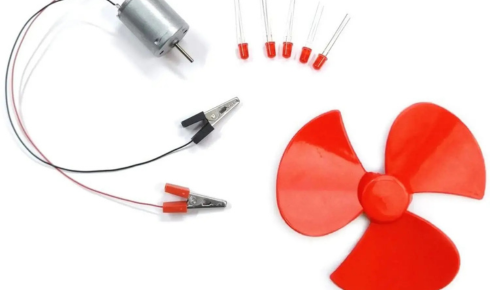
A dc motor is one of the most commonly used electrical devices that converts direct current into mechanical motion. Its simple construction, reliable operation, and affordable cost make it suitable for countless applications, including robotics, toys, household appliances, conveyor systems, water pumps, and DIY electronics projects. DC motors are available in various sizes and power ratings to meet different requirements. Students frequently use them in educational models because they are easy to control and demonstrate the basic principles of electricity, magnetism, and rotational motion. Their versatility makes them an essential component in both academic and industrial environments.
Physics Project Ideas for Practical Understanding
A physics project helps students understand scientific principles through observation and experimentation rather than relying only on theoretical concepts. Popular physics projects include electromagnetic cranes, hydraulic lifts, electric generators, pendulum experiments, magnetic levitation models, and solar-powered devices. These projects explain concepts such as force, motion, energy conversion, electricity, and magnetism in an interactive way. Building practical models also improves creativity, critical thinking, and troubleshooting abilities while encouraging students to explore real-world engineering applications. Physics projects are widely showcased in schools, colleges, and science exhibitions because they combine education with innovation.
Science Science Project for Skill Development
A science science project provides students with valuable opportunities to apply classroom knowledge to practical situations. These projects often include renewable energy systems, environmental monitoring devices, automatic irrigation systems, robotics, smart home automation, and water conservation models. Working on science projects enhances research skills, teamwork, logical reasoning, and technical confidence. Students also learn how to plan experiments, collect data, analyze results, and present their findings effectively. Such activities promote curiosity and inspire future careers in science, engineering, and technology while making learning more engaging and enjoyable.
Servo Motor for Precision Control
A servo motor is a specialized motor designed to provide precise control over angular position, speed, and movement. Unlike standard motors, servo motors use feedback mechanisms to achieve highly accurate positioning. They are widely used in robotic arms, CNC machines, camera stabilizers, remote-controlled vehicles, industrial automation, and aerospace applications. Servo motors are easy to interface with popular microcontrollers such as Arduino and Raspberry Pi, making them ideal for educational and robotics projects. Their ability to perform controlled movements with high accuracy makes them an important component in modern automation systems.
Importance of Practical STEM Education
Hands-on STEM education enables students to transform theoretical knowledge into practical skills. By building electronic circuits, mechanical models, and automation systems, learners gain experience in design, testing, programming, and troubleshooting. Practical activities strengthen critical thinking, creativity, collaboration, and communication skills while preparing students for higher education and technical careers. Schools and educational institutions increasingly encourage project-based learning because it develops confidence and promotes innovation in real-world problem-solving.
Choosing the Right Components for Projects
Selecting quality electronic and mechanical components is essential for achieving reliable project performance. Genuine motors, sensors, controllers, and structural materials improve efficiency, durability, and accuracy. Students should consider compatibility, voltage ratings, power requirements, and application needs before purchasing components. Reliable products reduce maintenance, minimize project failures, and ensure consistent results during demonstrations and competitions. Investing in quality materials ultimately saves time while improving the overall success of science and engineering projects.
Conclusion
Practical learning remains one of the most effective ways to understand scientific and engineering concepts. DC motors provide dependable mechanical motion, physics projects strengthen conceptual understanding, science projects encourage innovation, and servo motors deliver exceptional precision for automation and robotics. Together, these technologies help students build technical expertise, improve creativity, and develop problem-solving abilities. Whether preparing for a classroom assignment, science exhibition, or engineering competition, choosing the right components and applying scientific principles can lead to impressive, educational, and successful project outcomes.